
Sam Ambrose
Home
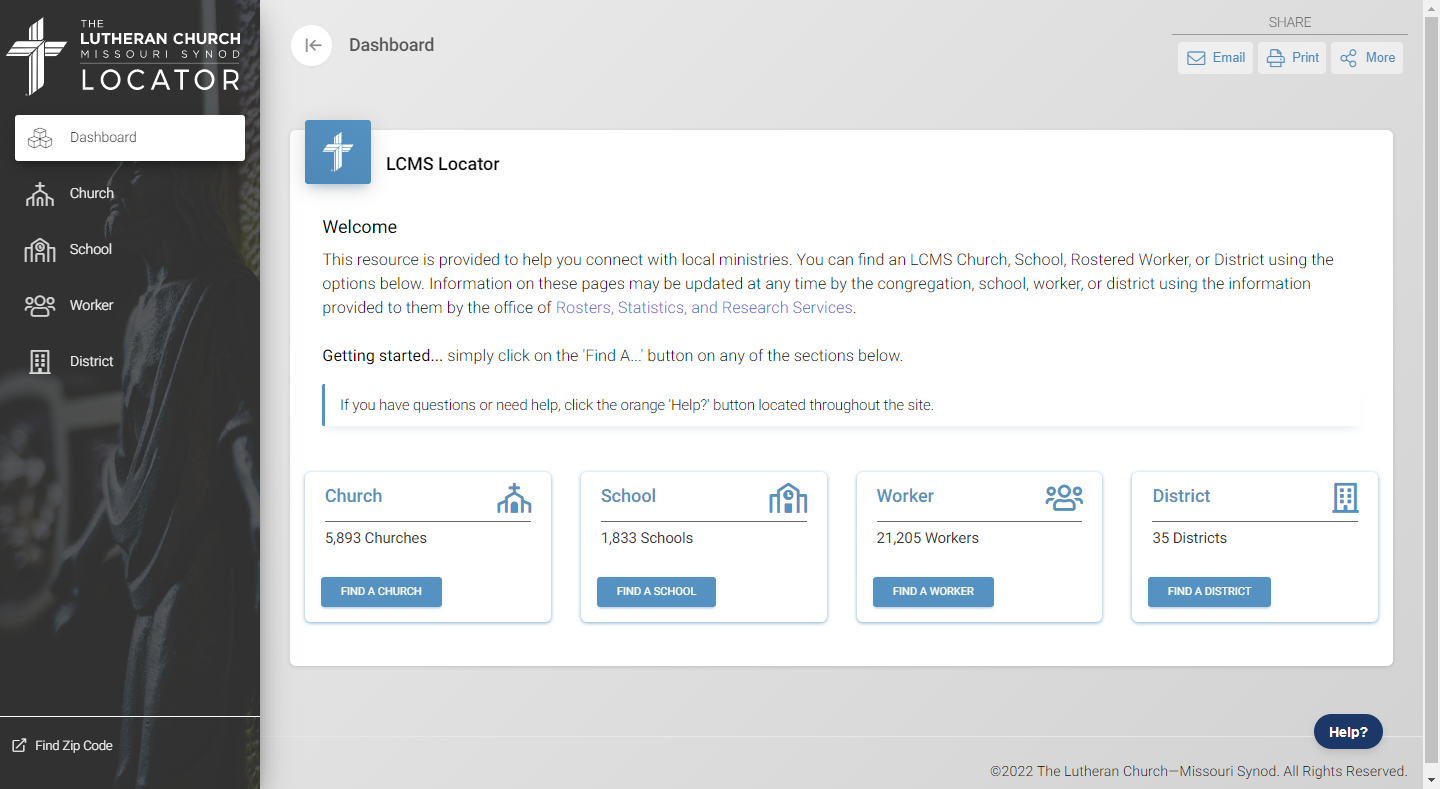

The LCMS locator system was built on outdated classic ASP code, making it unresponsive, unintuitive, and cumbersome for users to navigate. Over the years, temporary fixes had been applied, but these "band-aids" failed to address the underlying issues, leading to a fragmented user experience. The system lacked modern features and was difficult to maintain and expand upon. As a result, it was not meeting the needs of its users, nor was it aligned with current technological standards. This created challenges for both users, who struggled to find information efficiently, and developers, who faced difficulty in maintaining and updating the system.
To tackle these challenges, a complete rebuild of the LCMS locator system was necessary. The process began with extensive competitive research to understand the current landscape and identify best practices. Several key features were highlighted as essential for the new system, including:
With these goals in mind, the design phase focused on creating a responsive and intuitive interface. Modern frameworks were chosen to ensure scalability, maintainability, and ease of adding new features. Prototypes and wireframes were tested with users to gather feedback, ensuring that the design decisions were user-centered.
Analytics were also a key component of the redesign. By embedding event tracking, I was able to gather data on user interactions. This data informed decisions such as button placement and layout changes, optimizing the user journey based on real-world usage patterns. Iterative testing and refinement ensured that the new system not only met but exceeded user expectations.
The rebuilt LCMS locator system delivered a significant improvement over its predecessor. The modern, responsive design enhanced usability across devices, providing a seamless experience whether users accessed the system via desktop, tablet, or smartphone. The inclusion of mapping features with markers and pins made navigating and finding information more intuitive and visually engaging. The "Locate Me" feature provided a personalized touch, making the system more user-friendly and relevant.
The added analytics capabilities proved invaluable, offering insights into user behavior that led to informed adjustments in the design. This data-driven approach not only enhanced user satisfaction but also increased engagement metrics, as users were able to find information more efficiently. The streamlined maintenance and scalability of the new system reduced development overhead and allowed for quicker implementation of new features, paving the way for future growth.
Overall, the redesigned LCMS locator system transformed a legacy application into a modern, user-centric tool, demonstrating the power of thoughtful design and strategic planning in revitalizing outdated technology.


