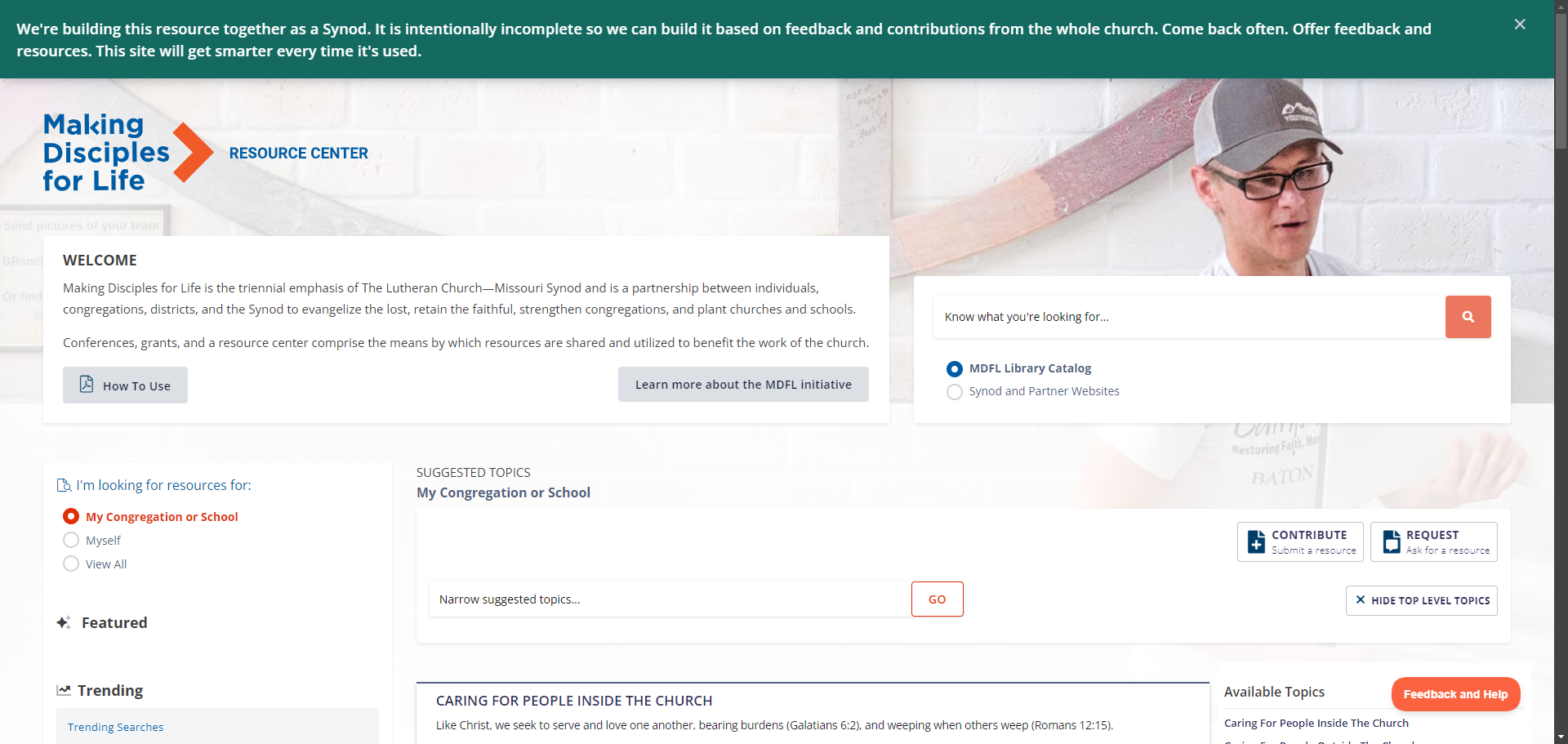
The Lutheran Church Missouri Synod (LCMS) needed a more effective way to manage and present its wealth of educational and informational resources, including blog posts, PDFs, videos, and other files. The existing system made it difficult for users—ranging from church leaders and educators to congregants and laypeople—to easily find and access the content they needed. The lack of efficient search functionality and content organization led to frustration, diminished engagement, and underutilization of valuable resources.
The primary challenges were:
- Enhancing Content Accessibility: Users needed an intuitive and user-friendly way to locate and interact with a diverse array of materials.
- Improving Search Capabilities: The system required robust search functionality to ensure that users could find relevant content quickly and accurately.
- Facilitating User Interaction: There was a need for features that allowed users to rank, request, and even contribute content, fostering a sense of community and collaboration.
- Leveraging Data for Personalization: Data-driven insights were necessary to dynamically order and rank content based on relevance and user behavior, making the system more responsive to user needs.
To address these challenges, I implemented a user-centered design process tailored to the unique needs of the LCMS community:
- User Research & Stakeholder Interviews:
- Conducted interviews with a variety of users, including church leaders, educators, and congregants, to understand their needs, challenges, and preferences.
- Worked closely with LCMS stakeholders to define project objectives and gather specific requirements for the system.
- Content Audit & Competitive Analysis:
- Performed a thorough audit of the existing LCMS content to understand the scope and diversity of materials.
- Analyzed similar content management solutions used by other religious organizations to gather insights on best practices for content visibility and user interaction.
- Wireframing & Prototyping:
- Developed initial wireframes to map out key user flows, navigation structures, and content organization strategies.
- Created low-fidelity prototypes to test and validate design concepts with users and stakeholders, refining based on feedback.
- UI/UX Design:
- Designed high-fidelity interfaces that were visually consistent with the LCMS brand and accessible to users of all ages and technical abilities.
- Integrated interactive elements for content ranking and requests, ensuring these features were intuitive and easy to use.
- Focused on designing a streamlined search interface powered by Google Custom Search to enhance content discovery.
- Implementation of Search & Data-Driven Features:
- Utilized WordPress as the content management system to organize and manage resources effectively.
- Integrated Google Custom Search to provide robust, accurate search results tailored to user queries.
- Developed algorithms to analyze user behavior and dynamically adjust the ranking and ordering of content, ensuring that the most relevant resources were featured prominently.
- Testing & Iteration:
- Conducted usability testing with a diverse group of LCMS users to gather feedback on the new system.
- Analyzed feedback and website analytics to identify potential improvements and areas where user expectations were not fully met.
- Made iterative design adjustments to enhance usability and ensure a seamless user experience.
The redesign of the LCMS resource management system led to several positive outcomes, significantly enhancing user experience and engagement:
- Enhanced User Experience: The redesigned system provided a much more intuitive and efficient way for users to find relevant resources. Feedback from users indicated that the new navigation and search functionality made the process of locating content more straightforward and less time-consuming.
- Increased Engagement and Interaction: By incorporating features that allowed users to rank, request, and contribute content, the platform fostered a greater sense of community. Users felt more empowered and involved, which encouraged more frequent and meaningful interactions with the content.
- Improved Content Relevance: The use of data-driven algorithms to rank and order content based on user behavior helped ensure that users were presented with the most relevant and valuable resources. This made the platform more responsive to individual user needs and preferences.
- Positive Feedback from Stakeholders and Users: Stakeholders and users alike appreciated the intuitive design and enhanced functionality of the platform. The improvements were seen as aligning with the LCMS's mission to provide accessible, valuable, and relevant resources to its community.
- Scalability for Future Growth: The design and technology choices made during the redesign ensured that the system could easily accommodate future growth. This included the ability to add new content types and functionalities as the needs of the LCMS community evolved.